

Careful readers will notice I never finished publishing the final piece of the Cryonics Community Survey of 2022, parts 1 and 2 of which were published back in 2023.
Well, fear not, my fellow Cryonicists - let it never be said we don’t finish what we start here at The Cryosphere Press.

In case you might’ve pushed the first two parts out of your context window, here’s a refresher.
Part One looked at who Cryonicists are, at present.
Part Two examined respondents’ philosophical and psychological views.
Here in part three we’re going to look at the details of people’s Cryonics arrangements. How long did it take them to sign up? What were their biggest blockers? What are the biggest reasons they chose one provider over another? And more, likely much more than you wanted to know about the proclivities of your fellow Cryonicists (unless you’re a Cryonics Service Organization CSO).
Here, we’re going to be focusing on dues paying members or people who are “almost” across the finish line (committed to signing up and somewhere in the process).
Let’s dive in.
Q66 - Neuro vs Whole Body vs Brain Only
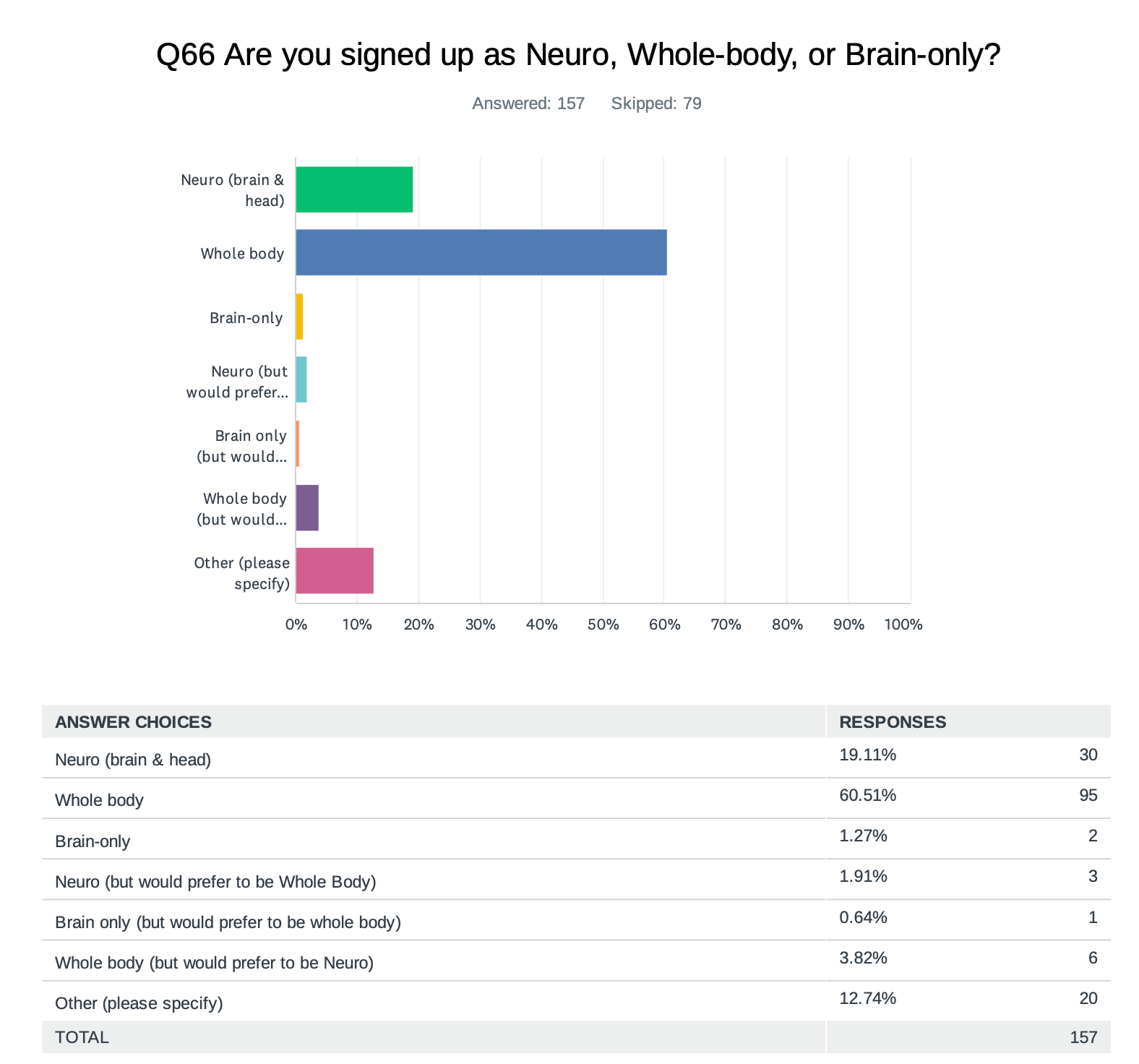
The majority of people want to keep it all, not just the brain or the “brain in a protective shell” (neuro). Do note, this survey was taken before Tomorrow Bio launched its brain only preservation option.
Q67 - What are peoples’ thoughts on the “Neuro” option specifically?
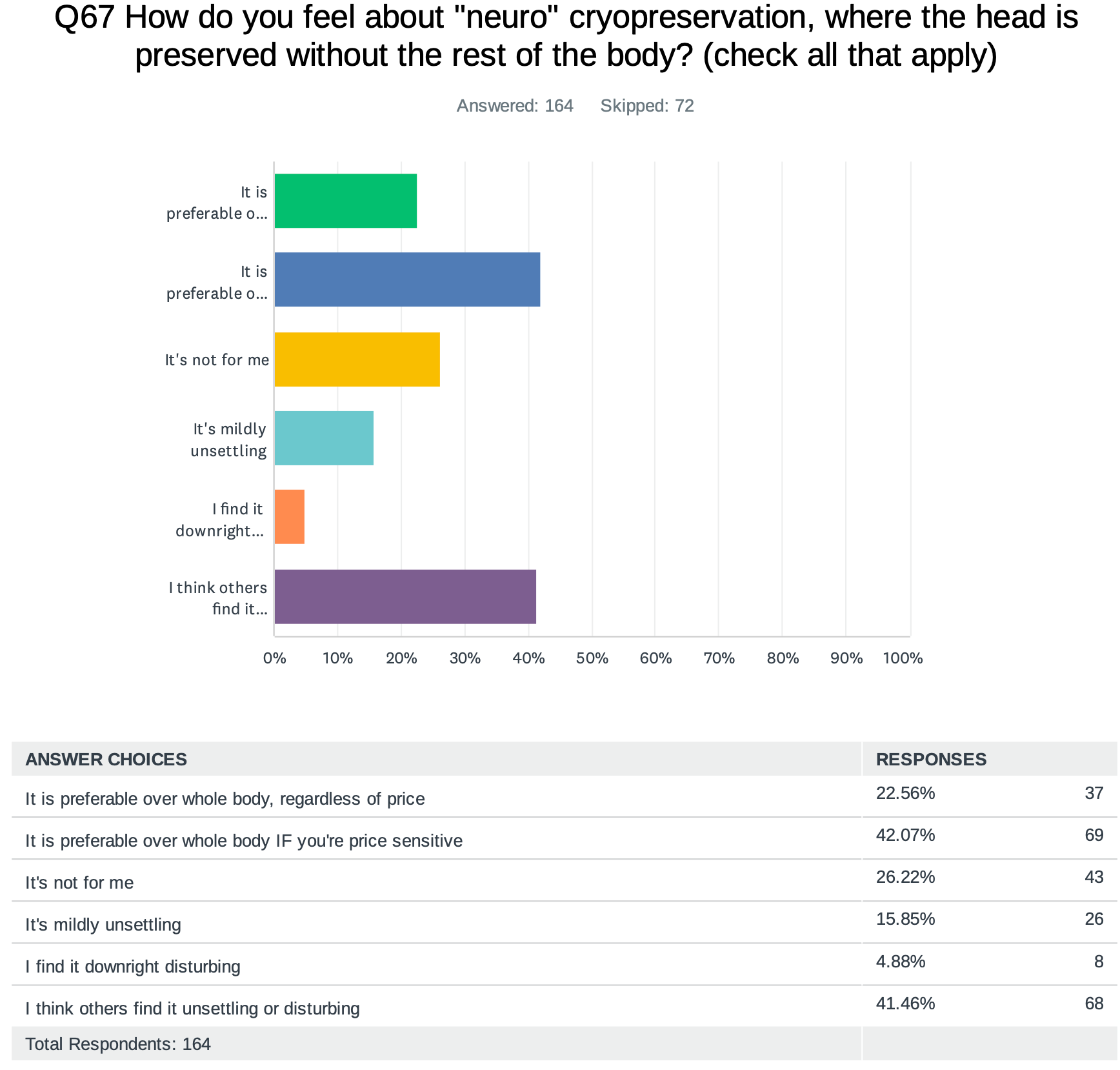
Around 40% of respondents said they believe others find it unsettling or disturbing, which to me seems low (do you know any normal person who doesn’t find it disturbing?).
Q68 - How about just the brain?
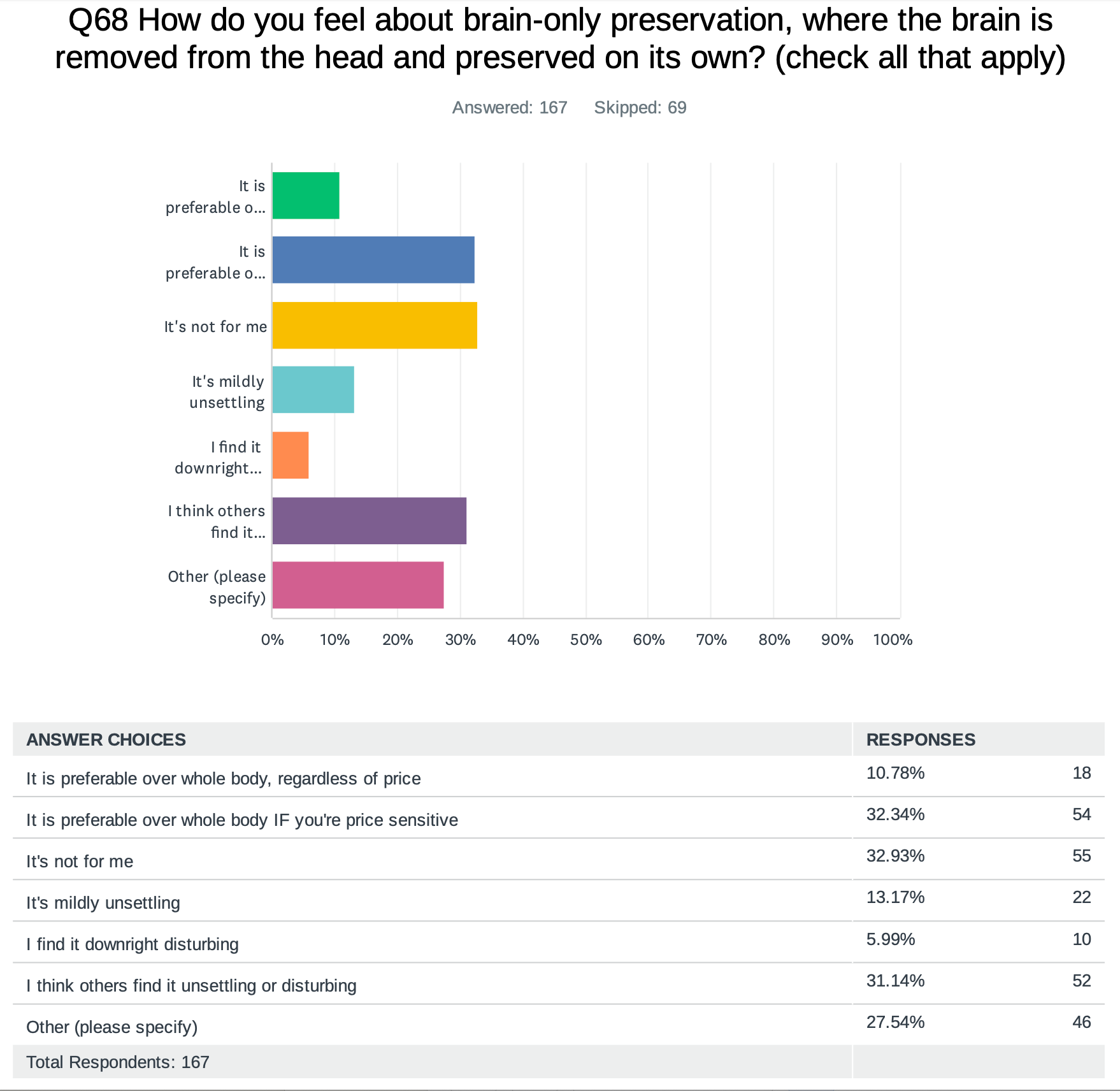
Respondents believed that preserving the brain was actually less disturbing to “others” than preserving the brain in a protective box; likely because it doesn’t seem like a “person” so much as simply an anatomical object in that case.
A lot of the “other” answers that respondents had here were along the lines of (as one respondent put it): “Removing it [my brain] from the skull is silly; it foolishly forgoes the protection offered by the skull as a container”.
Q69 - Show me the money?
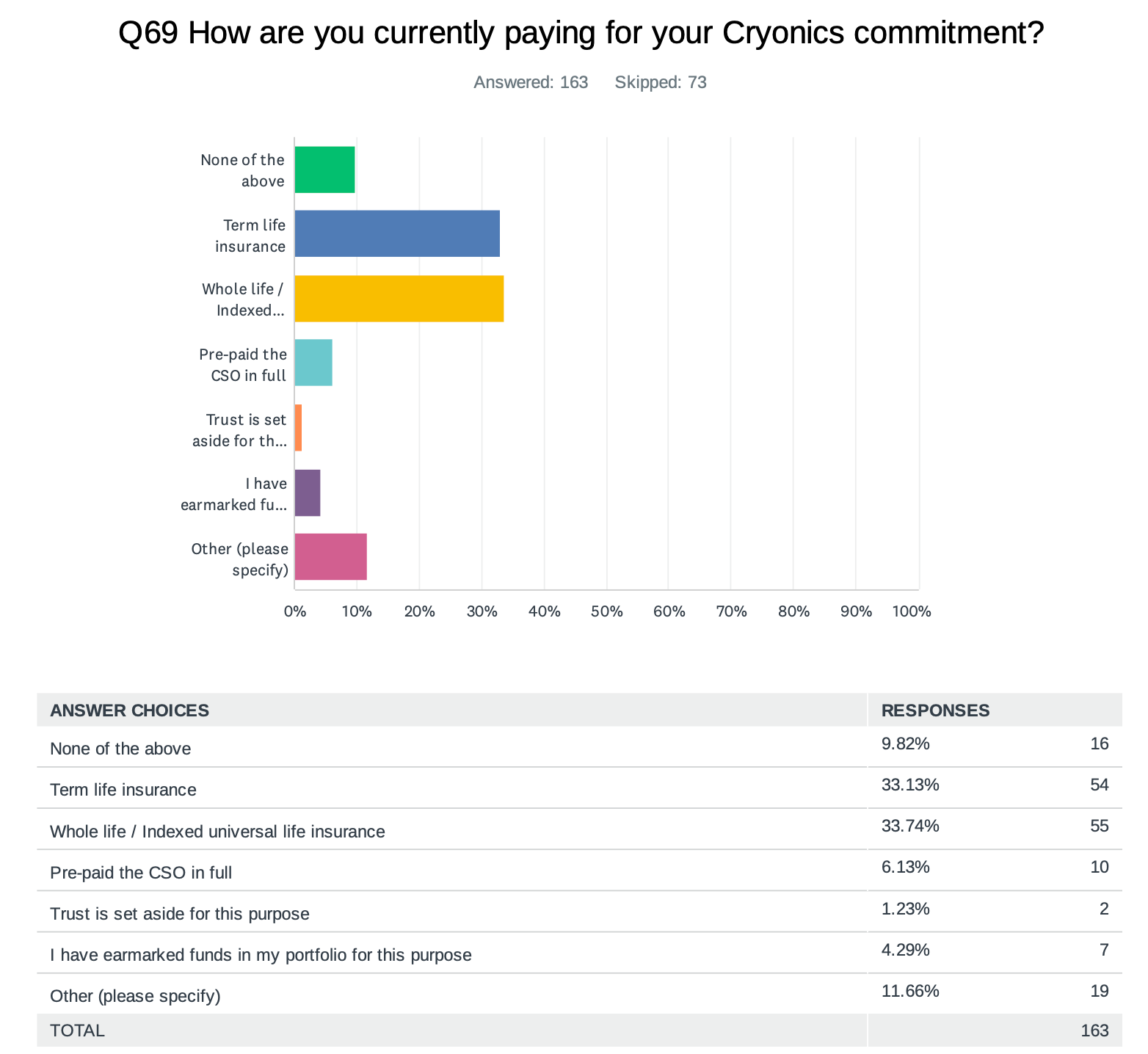
Unsurprisingly, most people cover this through life insurance. Looking through the “Other” category is mostly people elaborating on various types of life insurance that didn’t quite fit into the previous category (funeral insurance, employee benefits, etc), but it’s still mostly insurance. Only around 10-15% of folks seem to rely on non-insurance means of coverage. Granted this survey doesn’t take “last minute signups” done by, say, a person’s children into account, or crowdfunded cases like Kim Souzzi, but those are quite rare.
Q70 - Which Cryonics Org are you a Member Of?
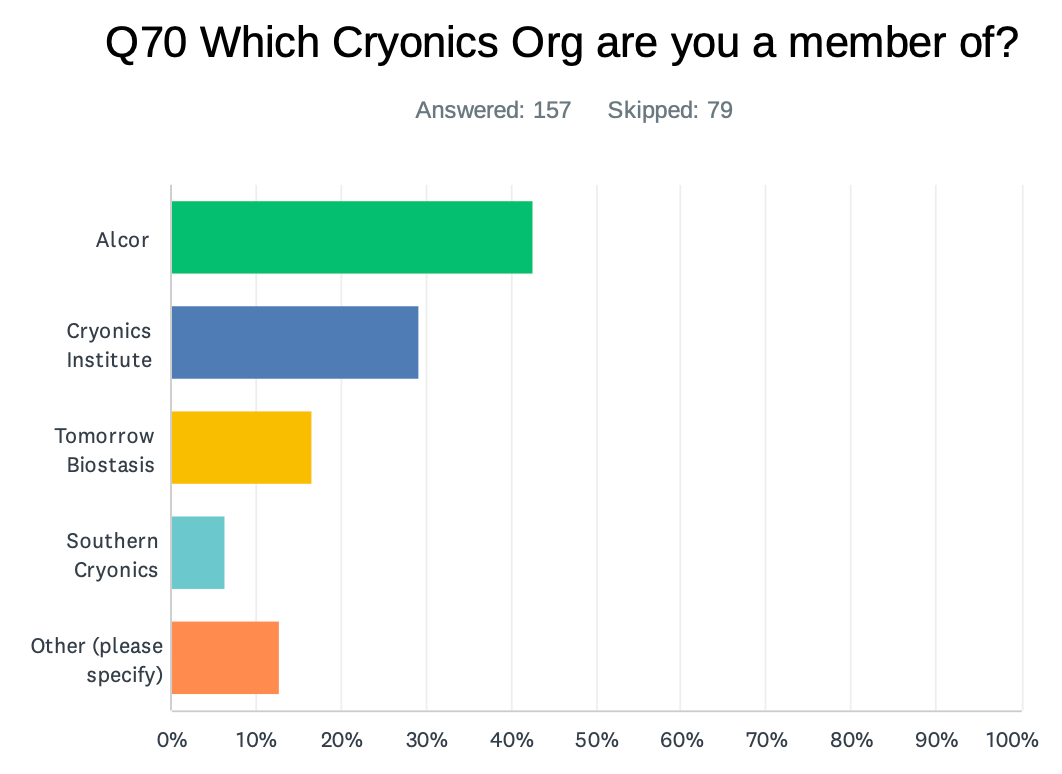
Unsurprisingly most respondents were Alcor/CI, but TB was also well represented.
Q71 - Why did you go with your current CSO?
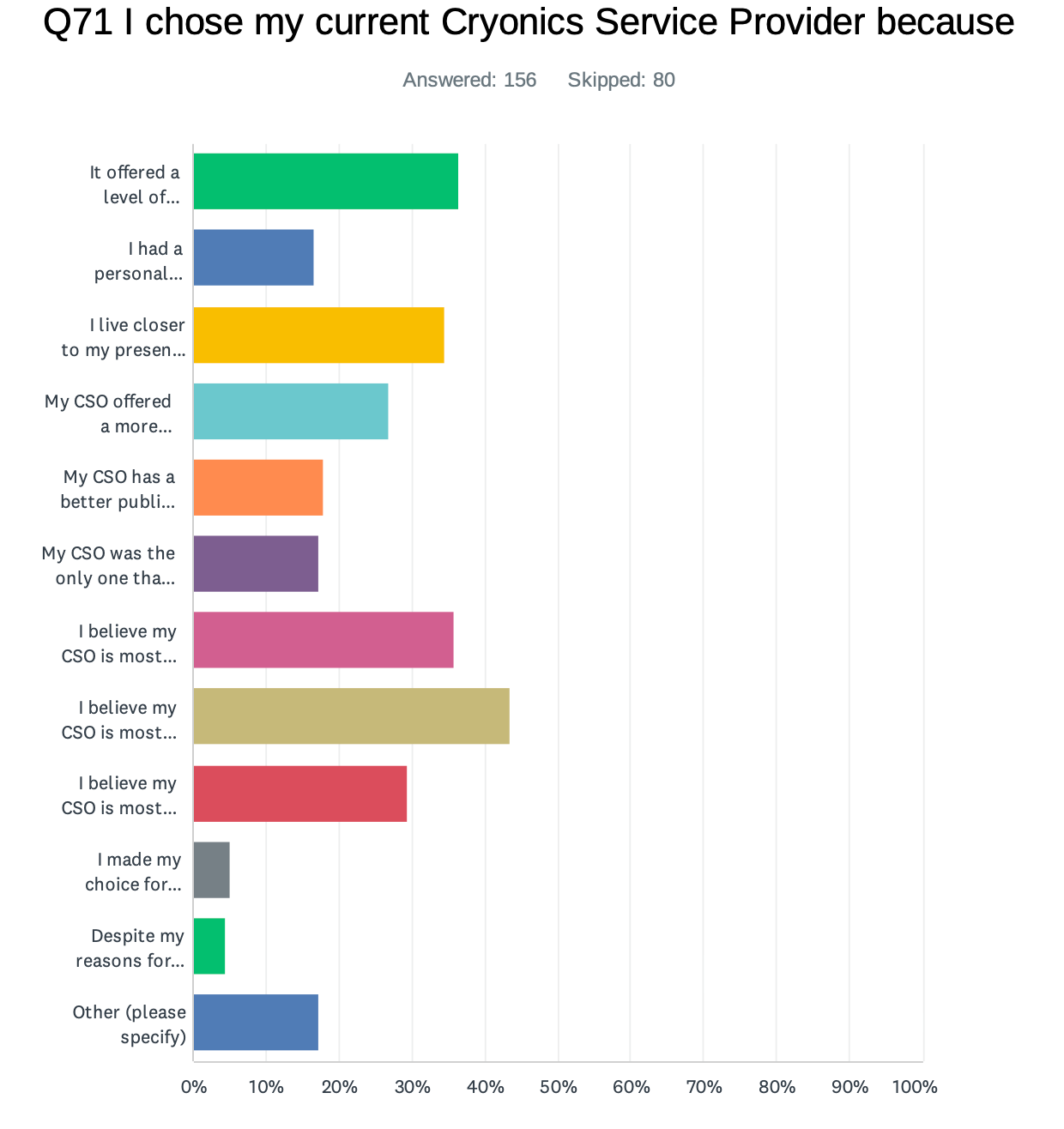
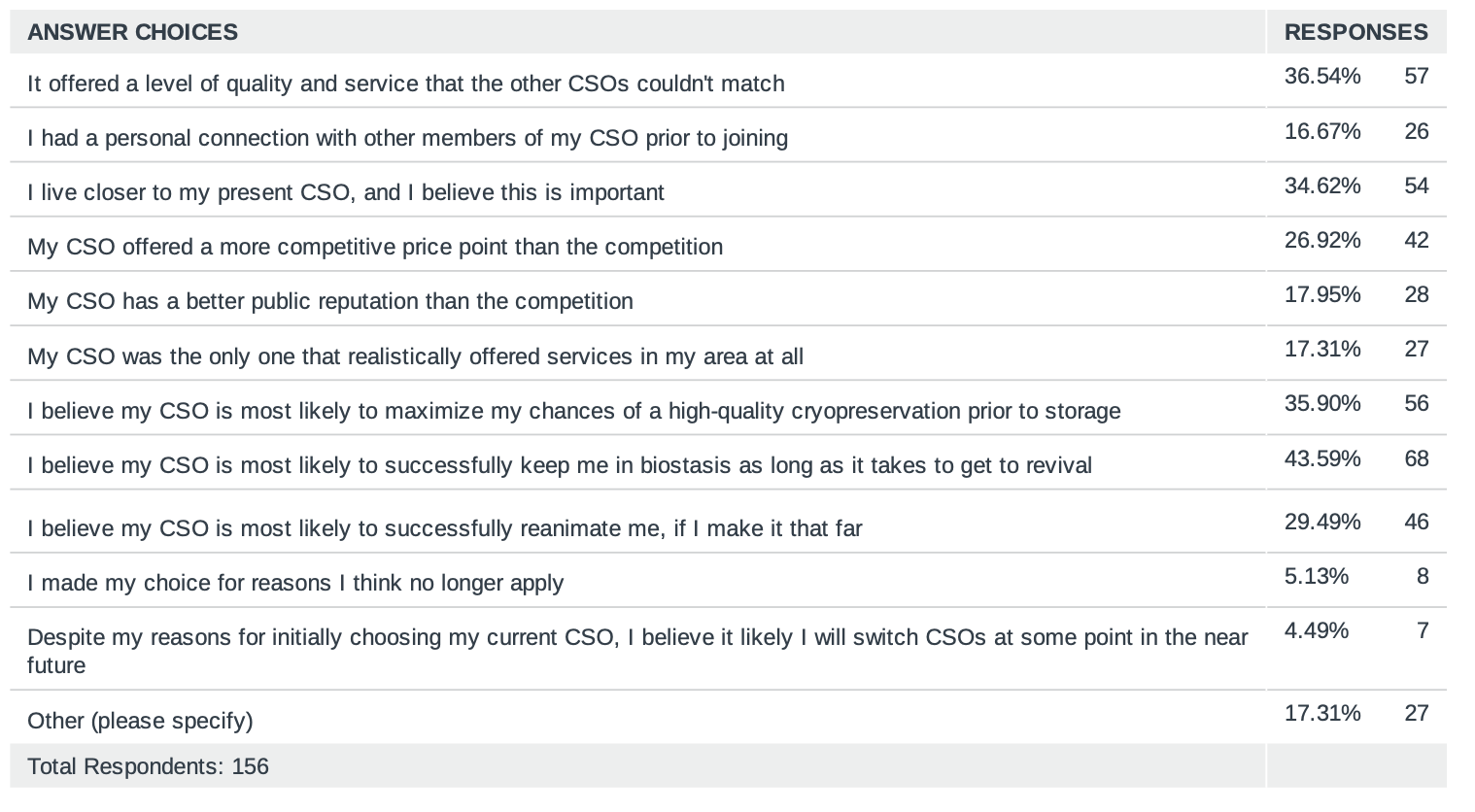
The most popular answer here was having chosen a CSO because you believed it would provide you with the highest level of care (said in various different but related ways). That said, one wonders how much of this is motivated reasoning once you’re signed up with some particular CSO or other. An interesting question to ask in the future would be for Cryonicists that changed CSOs at some point why they decided to switch (likely a small number of folks though).
Runners up here were proximity to the CSO and a competitive price point.
Q72 - What about your particular CSO keeps you up at night?

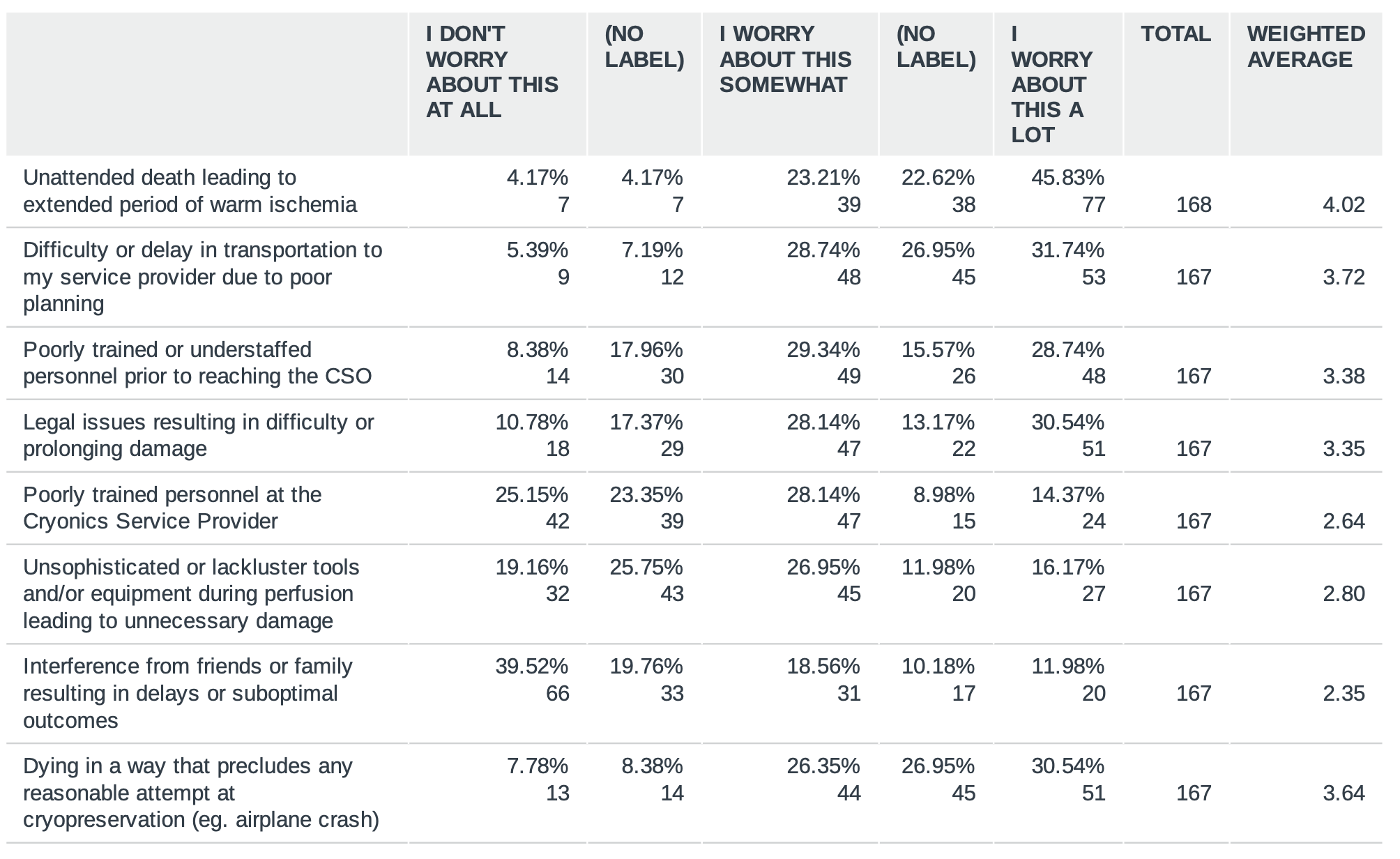
The graph here was difficult to keep up with, so I’m sparing you the pain and giving you the numerical chart. Basically, people worry the most about unattended death, and they worry the least about their friends or family causing delays at the end that might affect their cryopreservation. It would be interesting to hear how well these concerns line up with what actual SST (standby stabilization and transport) teams see “in the field” as to who (or what) causes those delays or problems during cryopreservation.
Q73 - Bad stuff happening while you’re in the dewar.
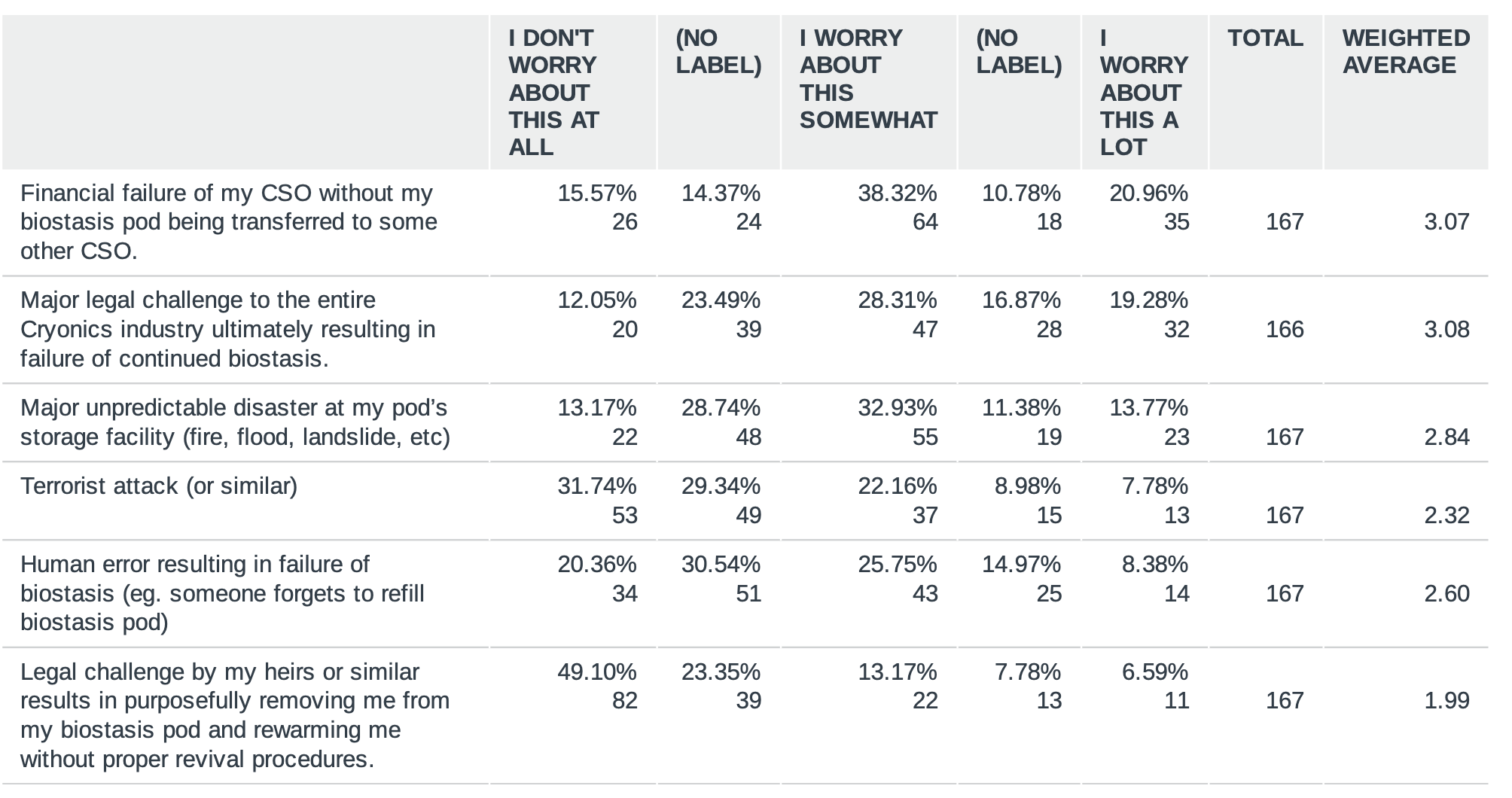
People worry the most about failure of the CSO itself (organizational failure) far more than, let’s call them, “external” threats. We also see the same pattern here that people don’t really worry about their next of kin being the risk factor when it comes to their cryonics arrangements.
Q74 - Waking up from your dreamless sleep

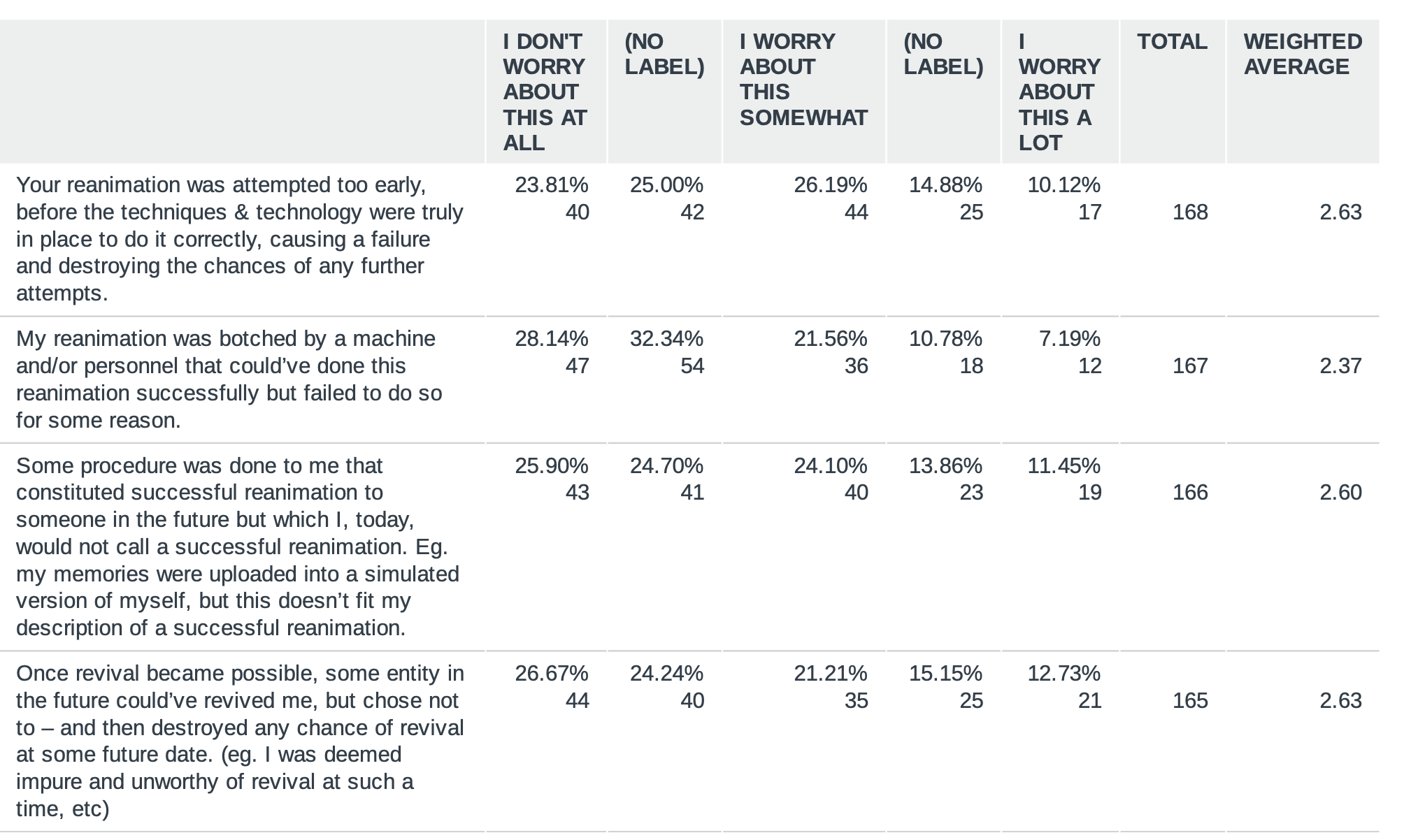
It seems people don’t really worry much about the final step. Or, perhaps, they haven’t given it much thought?
Q75 - What should your CSO be doing with your money?

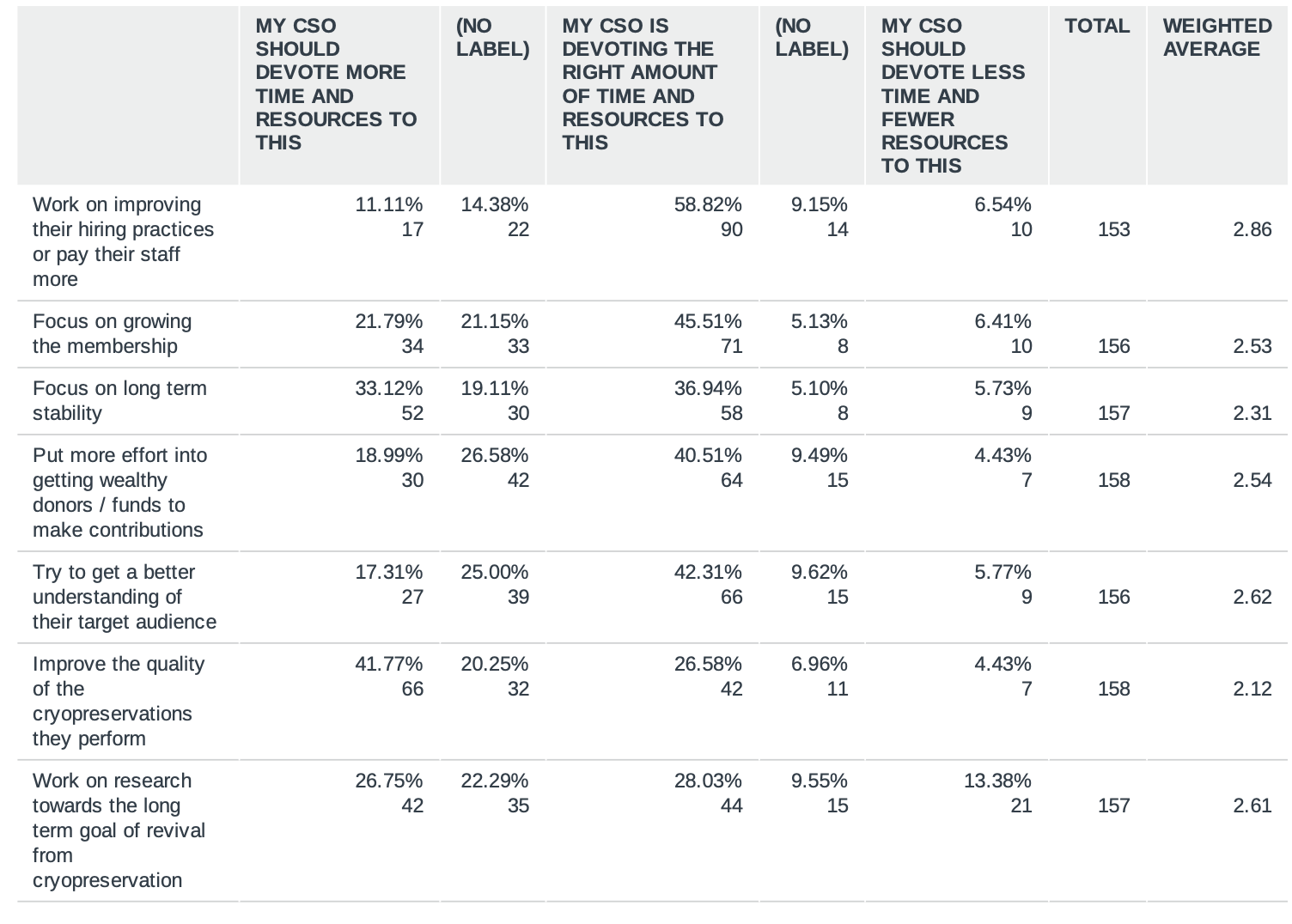
From this we can conclude that overall, most people, feel their CSO is doing what they should with the resources they have available. That said, the most popular answer here was that CSOs should be devoting more of their resources to improving the quality of cryopreservations - relative to the other things they could be doing.
Q76 How has Cryonics changed me?
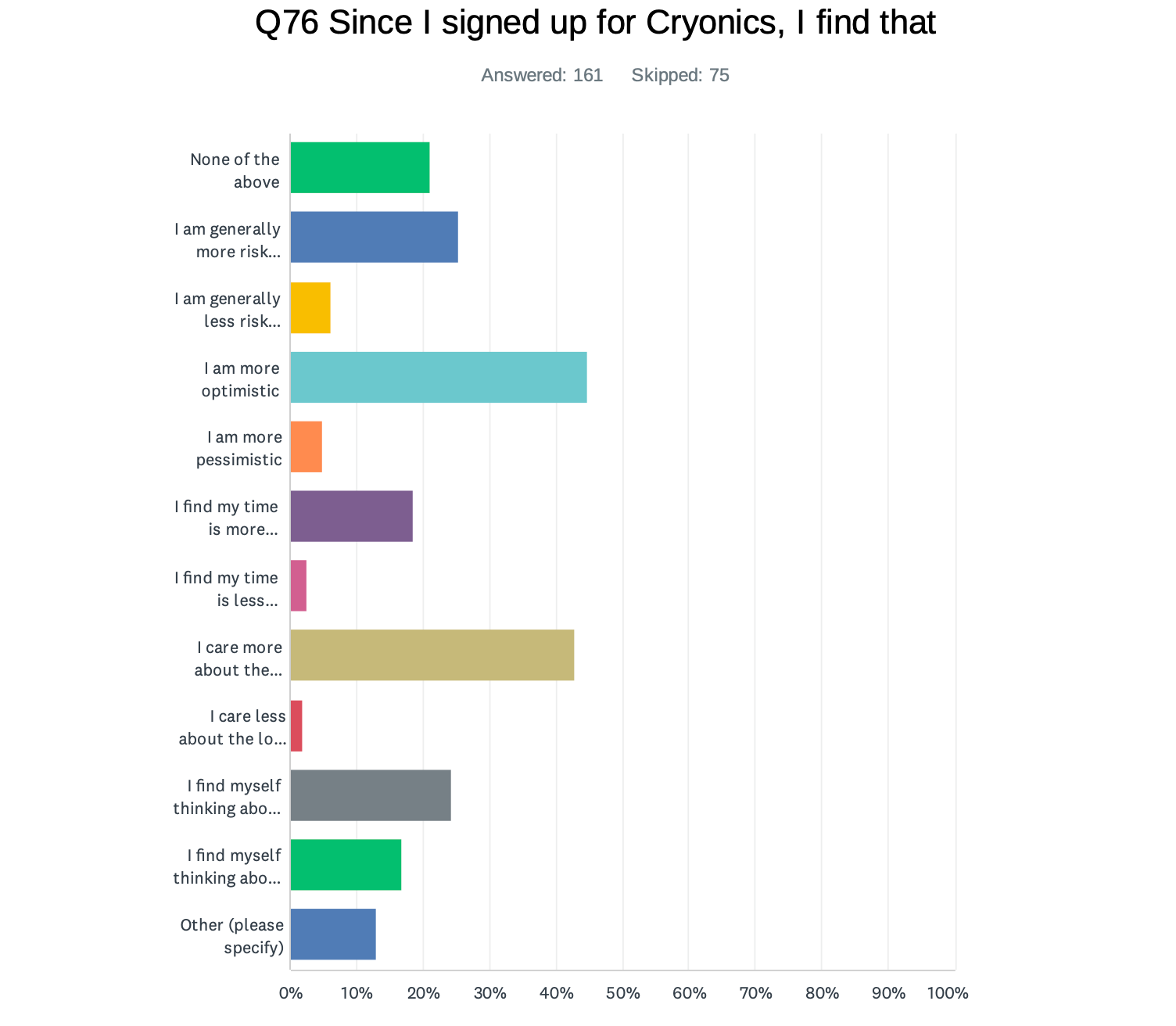
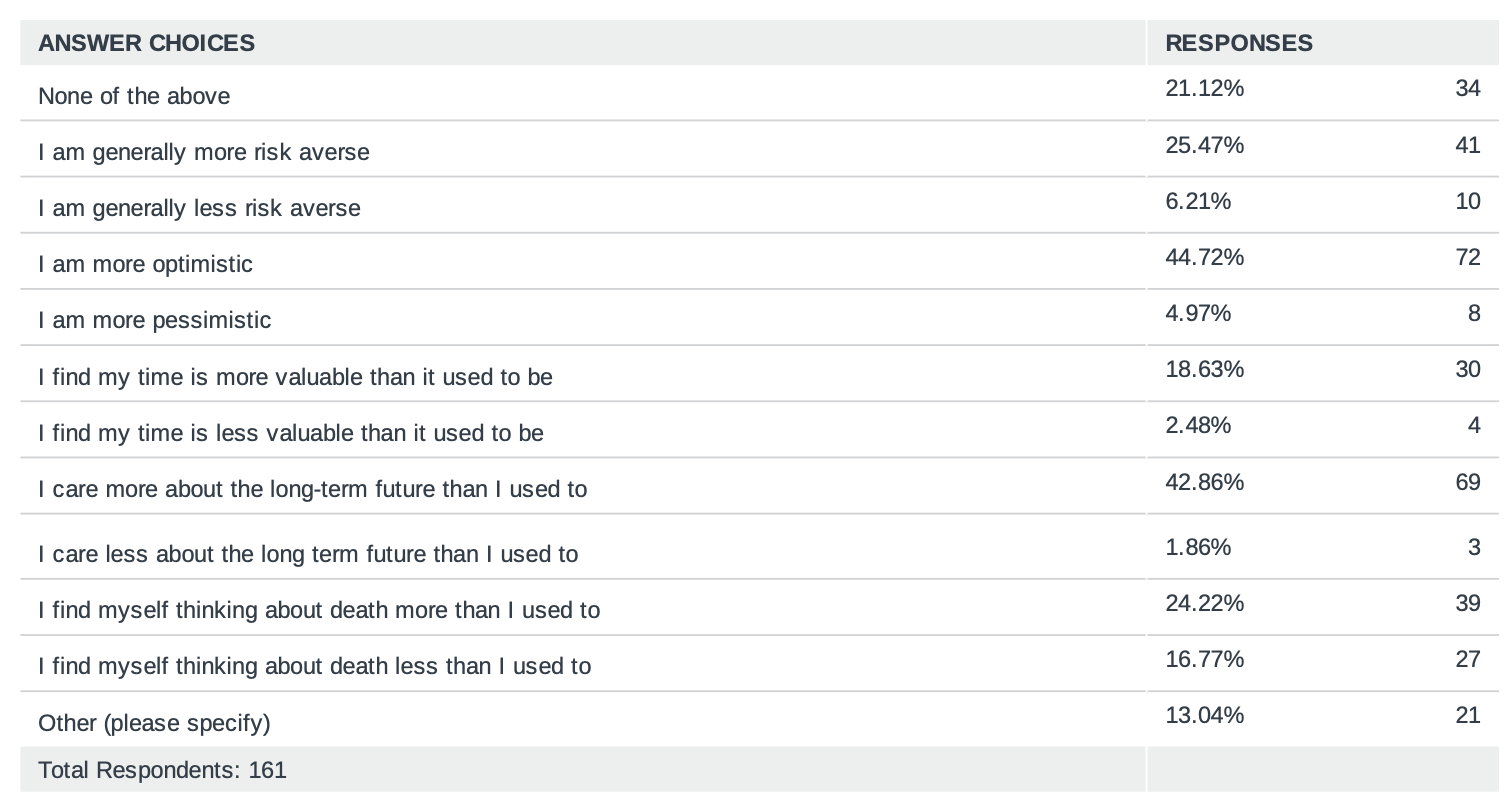
This one is quite fascinating. The by far most popular answer was that people care more about the long-term future and they’re generally more optimistic than before signing up… This seems in-line with the (in retrospect, obvious) notion that you care more about the future when you have a future to care about.
Q77 - Too rich for my blood?
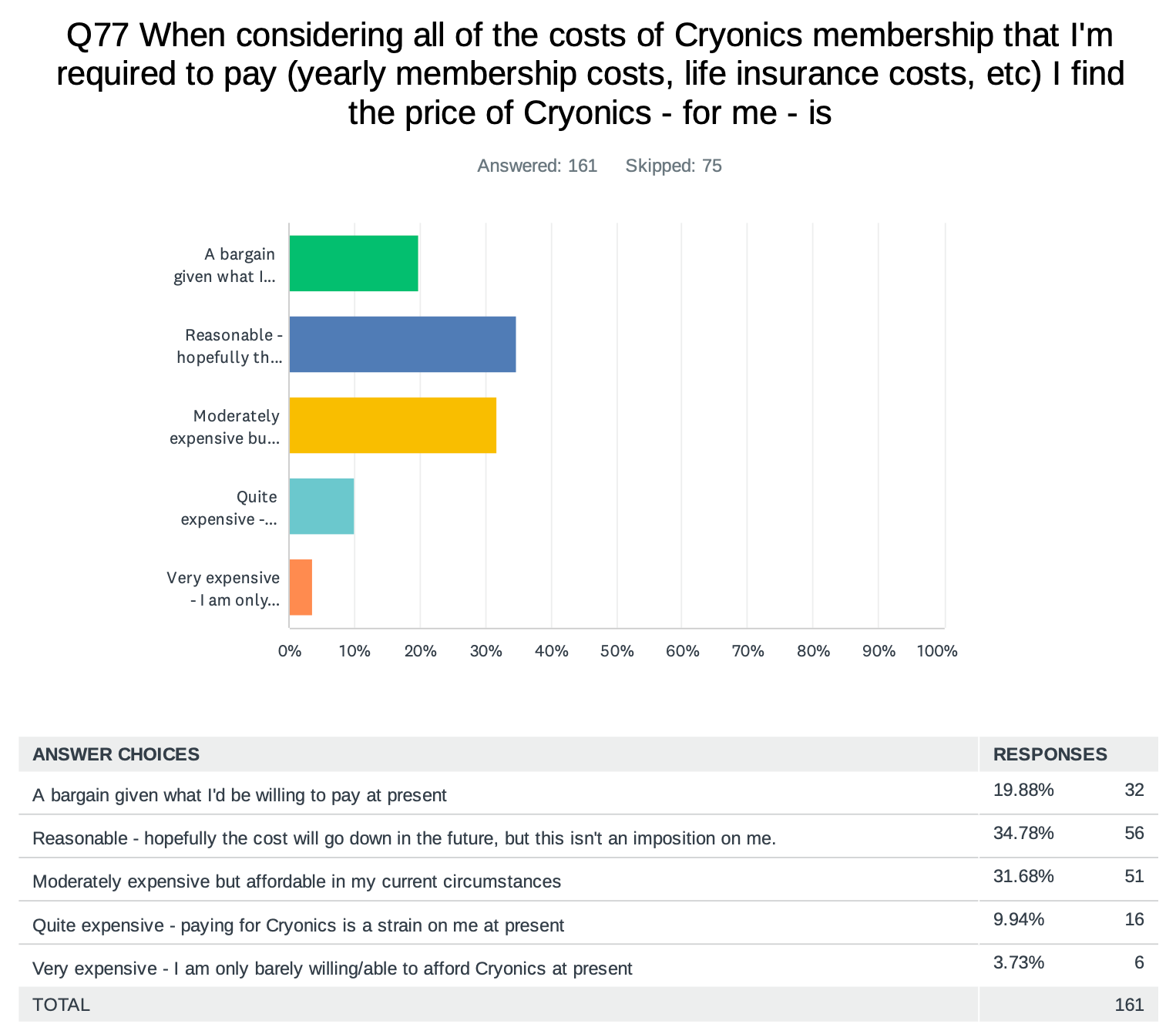
Of course, people that can’t afford Cryonics at all likely aren’t filling out surveys on the matter… but, instructive nonetheless to better understand folks who are already signed up.
Q78 - Doing your Homework
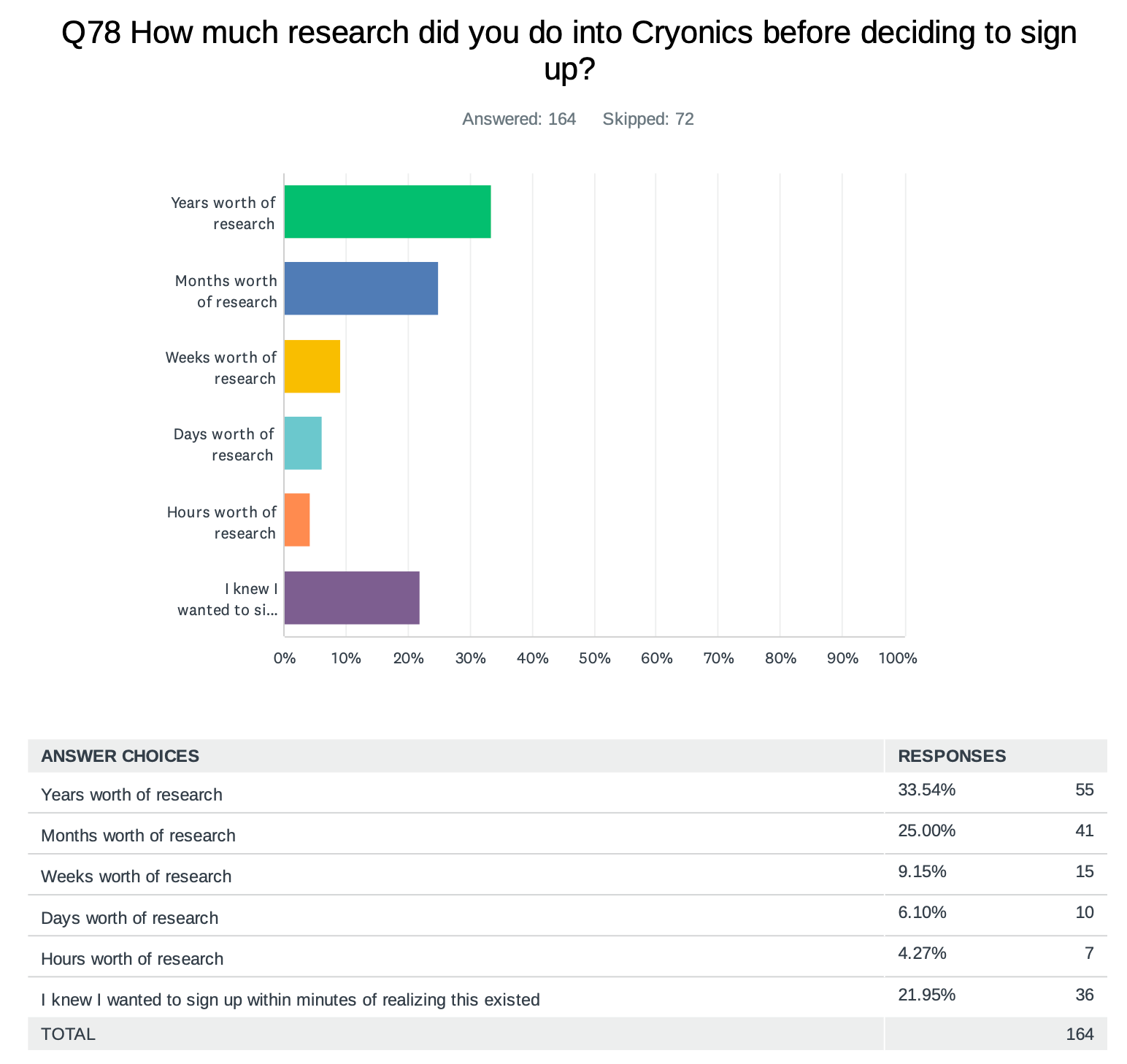
Virtually no one signs up within days or weeks of hearing about Cryonics. I put myself in this category, I did my research and concluded Cryonics was a good idea around 3-4 years before making my way through the application process.
Q79 - And what was your research?
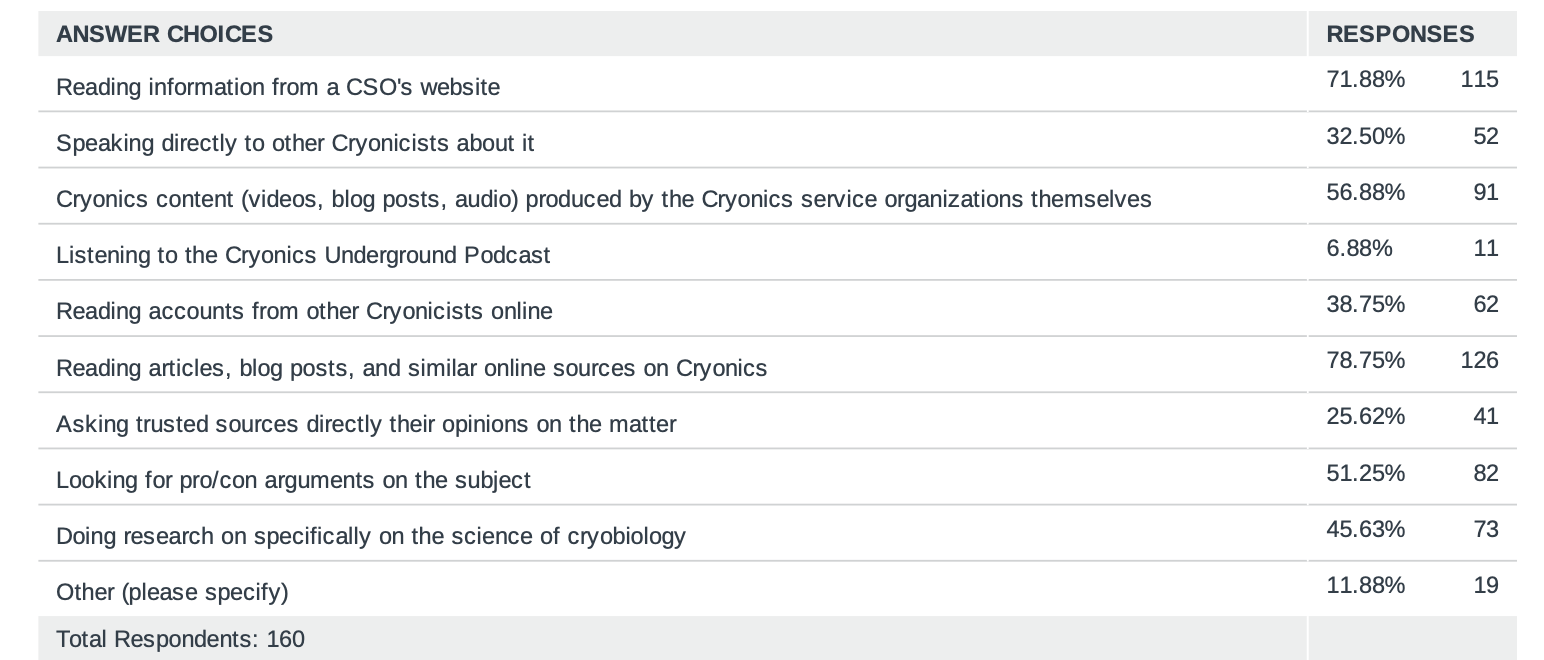
Short form, long form, Cryonicists like to read.
Q80 - Fixating on chemical fixation
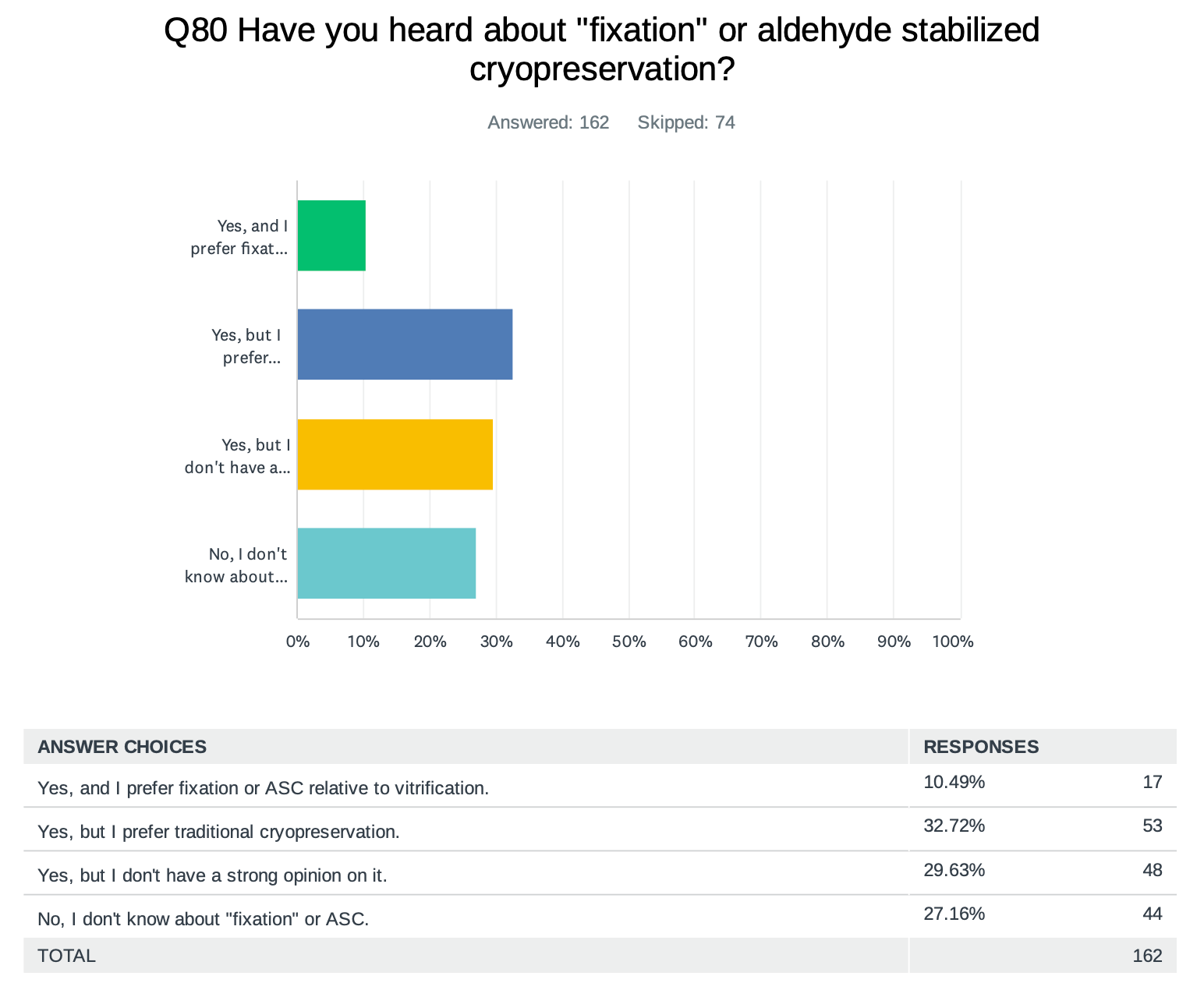
Most people don’t seem that excited or interested in these other forms of biostasis. That said, this may be a growing category in the future, especially if they can price their services well below traditional cryopreservation.
Q81 - ABC - Always Be Closing!
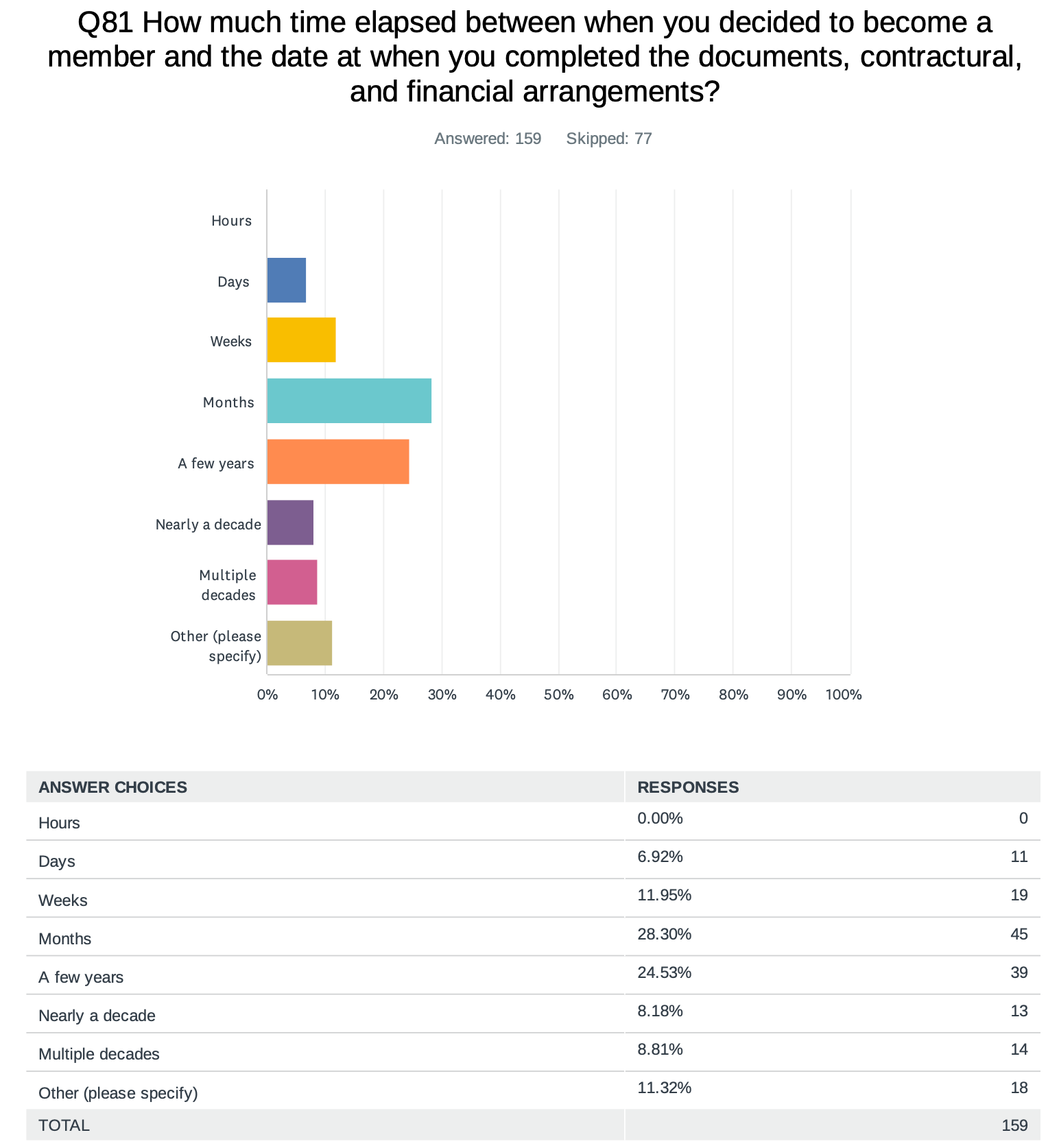
Even after making the decision, it was months (or even years) before people fully completed the process. I understand this has gotten a lot better lately - first with TB’s push, and now I believe Alcor has also improved their signup process as well.
—
And so concludes our three part series on the Cryonics Community Survey of 2022! Someday I’ll re-run the survey and see if/how things have evolved, but for now, I suspect these answers are still highly relevant and accurate of the sample population.
Let’s all hope that Cryonics as a field advances fast enough that these results are completely outdated sooner rather than later.
Stay warm (for now), fellow Cryonicists!
Another REALLY helpful and on-point project by Max Marty and colleagues about attitudes of cryonicists.
Max is smart and educated enough to point out various sources of bias in his research, and despite the relatively small number of respondees the data seems both accurate and robust to me. Because I have been deeply involved and committed to enrolling cryonicists for 30 years, and have a large percentage of the global community signed up and properly funded for cryonics, I have a pretty good handle on the characteristics of this niche demographic.
The bottom line?
The results Max has provided correlate almost EXACTLY with my personal experience.
This survey provides some HARD DATA for us, and helps inform our future initiatives to enable more effective recruiting campaigns. BRAVO, MAX MARTY!
Rudi
Thank you for doing this work, Max. Useful, interesting, and much appreciated.